A new chapter in a great story: National Gallery Prague begins to restore The Feast of the Rose Garlands
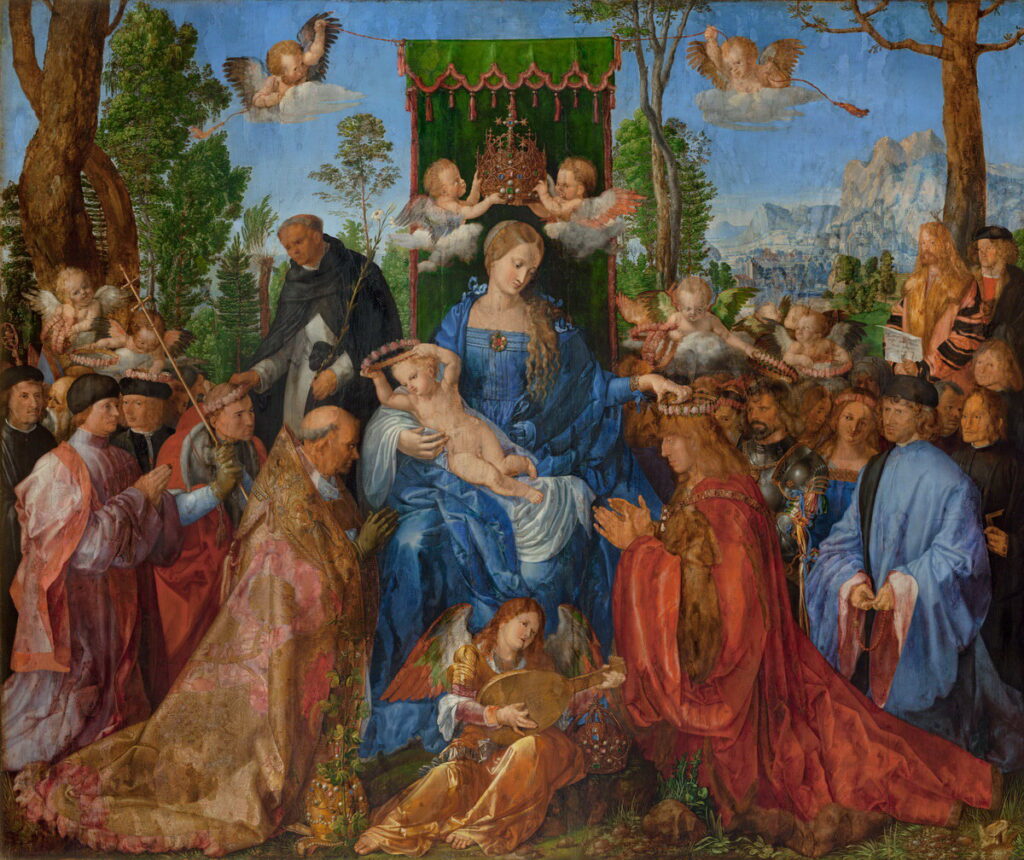
A photographic reproduction of The Feast of the Rose Garlands will replace the original for several months in the Old Masters I collection at Schwarzenberg Palace; from January, it will be replaced by another work. The iconic painting is moving to the restoration workshops for up to five years, where a team of specialists from NGP will use the latest available technology. The public can also support the restoration of this remarkable painting.
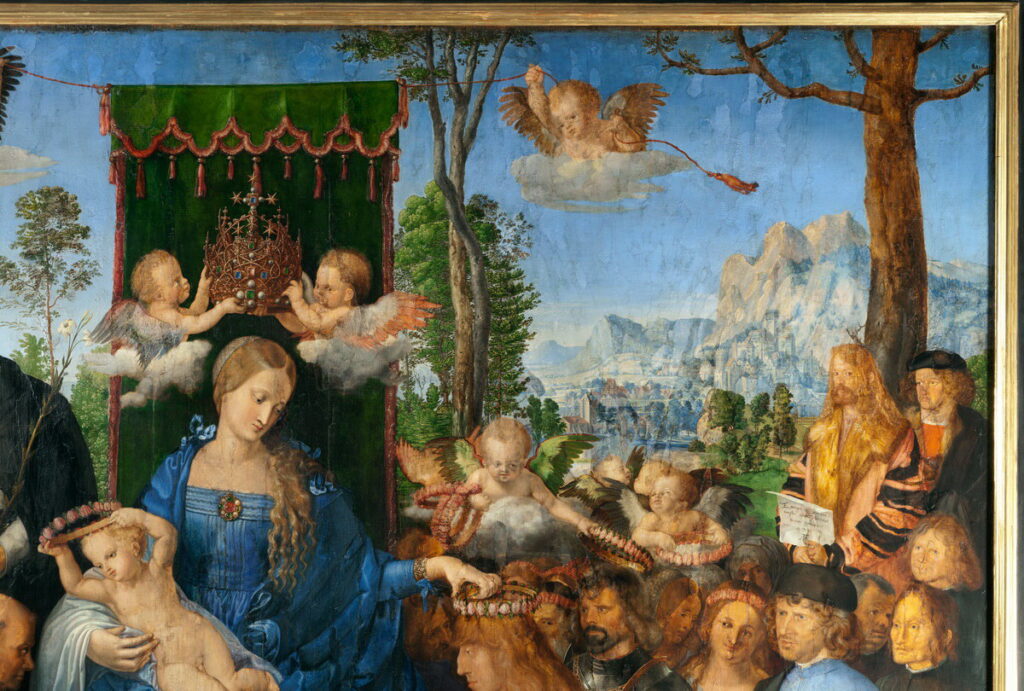
One of the most valuable works of the European Renaissance in the Czech Republic, The Feast of the Rose Garlands is also one of the most technologically complex artefacts extant in the country. It is painted on a poplar panel with a glue-gesso preparatory ground, consistent with 16th-century Italian practice. Dürer’s underdrawing combines pen drawing with dynamic brushwork, and the palette includes costly pigments, such as the natural ultramarine of lapis lazuli.
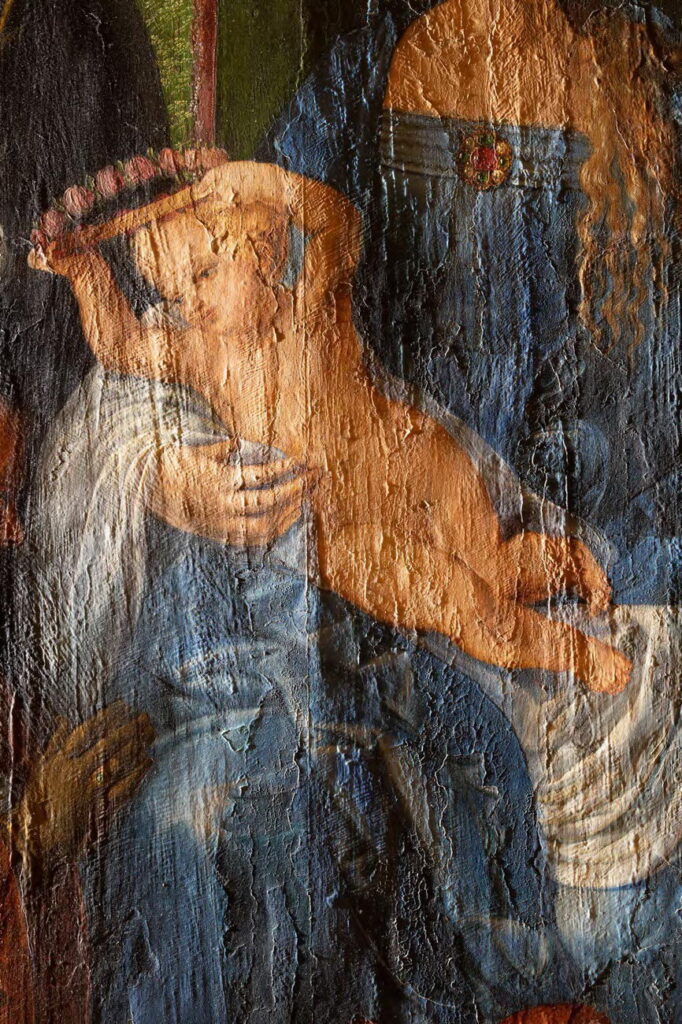
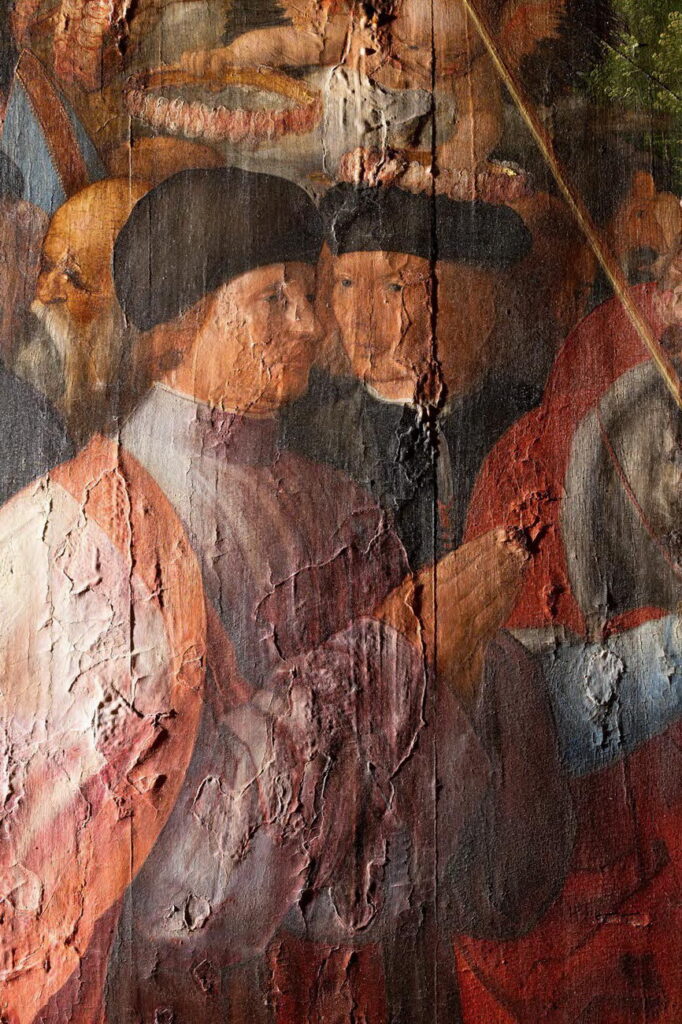
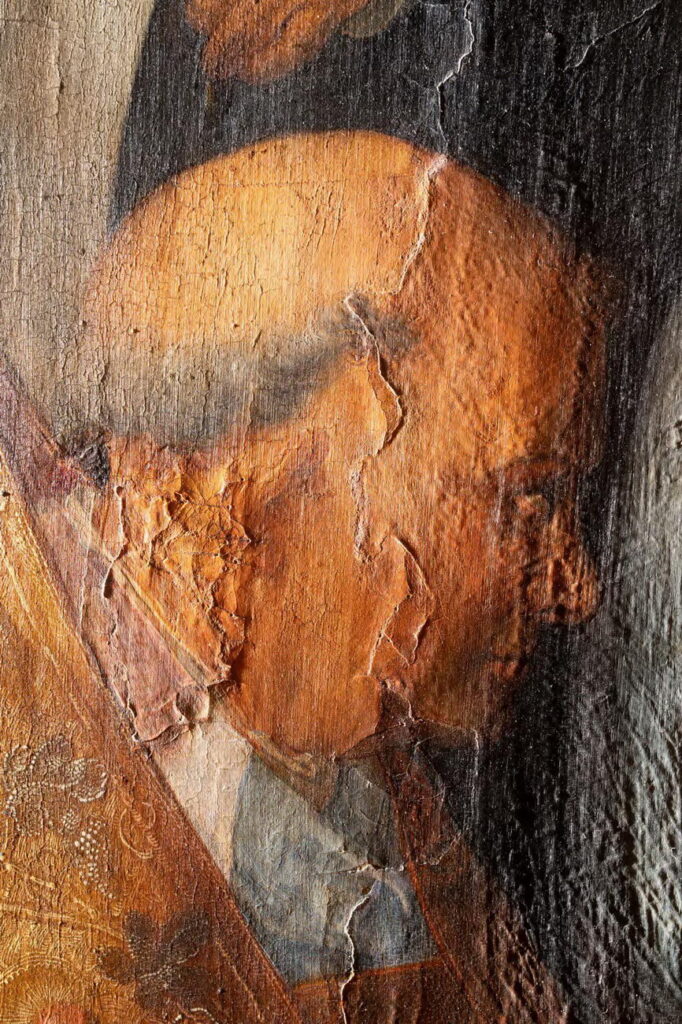
“The state of the painting is worsening slowly, but surely,” states Olga Kotková, General Director of the NGP and Director of the Collection of Old Masters. She explains: “In the places where the paint layer has begun to separate from the ground, cracks and losses are already visible to the naked eye. Conservation will halt this process. In addition, the relief-like nature of the painting’s surface visually diminishes the aesthetic value of this remarkable work of European painting. Restoration will ensure the painting is preserved for future generations. We are taking this step intending to make The Feast of the Rose Garland even more beautiful.”
The painting has been extensively researched several times over the past decades, most recently in 2010–2012 as part of the European project CHARISMA – MOLAB Transnational Access. This research produced significant findings concerning the state of the work and its material composition. However, the results also reveal serious damage to the original painting: extensive darkened retouching and varnishes significantly suppress the work’s colouristic quality, the defects affect up to one-fifth of the painted surface, and inappropriate fills are damaging the original layers.
What will happen to the painting?
The restoration will proceed in several phases. “In collaboration with the Restoration of Painting Studio at the Academy of Fine Arts in Prague and the Faculty of Nuclear Sciences and Physical Engineering at the Czech Technical University (ČVUT), we are currently analysing the painting materials using XRF mapping. This modern method allows us to map the elemental composition of the pigments in detail, giving us valuable information about their origin, composition, and the construction of individual paint layers, as well as the extent of secondary restorations and overpainting. Unlike classical spot analysis, XRF mapping also allows us to trace elemental composition across the surface. This gives us a more precise, complex understanding of individual pigment distribution in the painting, and allows us to better distinguish the original paint layers from later interventions. This phase of the research will last several weeks,” explains Adam Pokorný, Head of Conservation at the NGP, who will lead the team.
Work will then continue throughout October using a high-resolution 3D digital microscope in collaboration with ČVUT’s Faculty of Civil Engineering. This year, the NGP team will also analyse the painting’s organic matter in cooperation with the Kunsthistorisches Museum (KHM) Wien, with conservationists employing a full range of optical-physical methods (X-radiography, ultraviolet and infrared imaging, and related techniques).
“And based on the results of these analyses, we will design the approach and technological methodology of the conservation in consultation with a commission of international specialists. This will include digital designs of the work’s visual rehabilitation,” Pokorný describes, adding: “Even though we have the most cutting-edge technology, I’m glad our team includes top conservators and restorers with many years of practice, experience and precision that no device can replace.” The international commission, which will meet for the first time this autumn, includes experts from Austria, Germany and Italy, as well as Czech specialists, including a team from the National Gallery Prague. “We’re facing a difficult decision-making process: to what extent we will return to Dürer’s original or, on the contrary, preserve the interventions made in Johann Gruss’s 1839–1841 restoration. For this reason, I’m pleased we have the chance to collaborate with an international team of specialists,” Pokorný states. New, unexpected questions or discoveries may also emerge during the process and require further research.
The NGP will update the public on the restoration roughly once a year, or more frequently in the case of particularly interesting developments or discoveries. The results of all work carried out will be presented once completed, and a specialist publication and international conference are also planned.
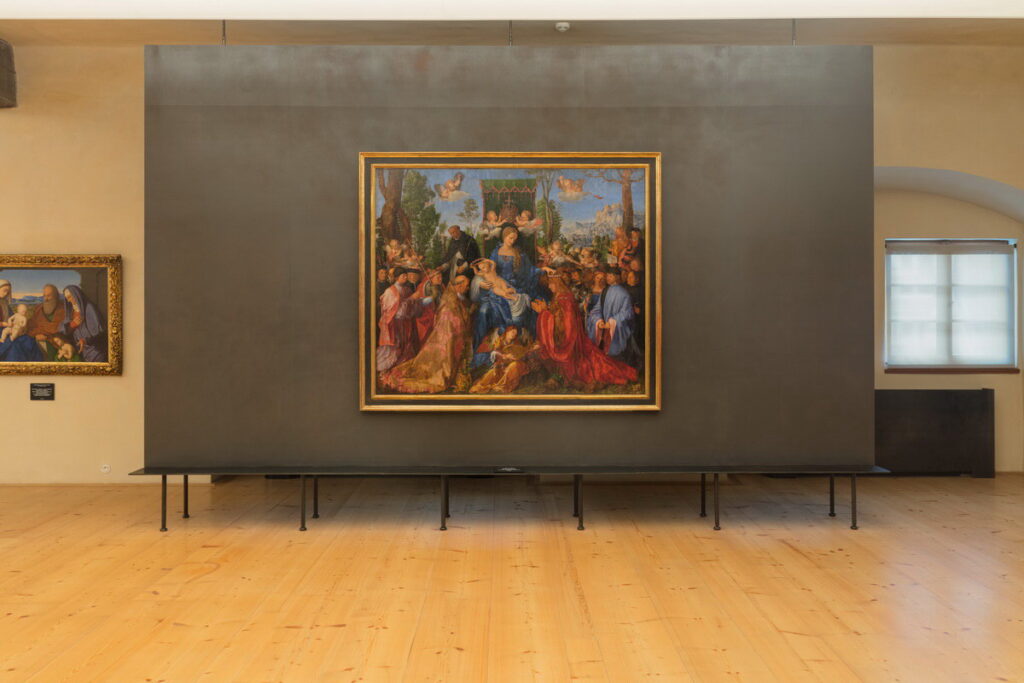
Since 1 September, a photographic reproduction of the painting has been exhibited in the Schwarzenberg Palace, alongside informational panels that explain the painting’s full story and the current conservation project to visitors. Beginning in January 2027, The Admiration of the Shepherds, by Frans Floris de Vriendt, will be displayed in the Old Masters I exhibition.
The public can also get involved in the restoration.
The NGP has already invested hundreds of thousands of Czech crowns in research on the work. Conservators from the National Gallery Prague will carry out all work, and the NGP’s budget will cover these costs for up to five years. The specialised research, utilising XRF mapping, in which the team is now engaged, is supported by a donation the NGP received from the Ministry of Culture in the amount of 210,000 CZK. “We anticipate that the total costs of the five-year project of restoring The Feast of the Rose Garlands will be about 9 million CZK. This includes the use of the most up-to-date technology, consultation with international specialists, anticipated technical examinations of the work, materials for the restoration, adjustments to the work, a new climate frame, installation and deinstallation of the painting, the publishing of a specialist publication, and the filming of a time-lapse documentary that will record everything for the specialist and lay publics and also assist other museums and galleries,” states Olga Kotková, General Director of the NGP.
“By supporting the restoration of The Feast of the Rose Garlands, the public can become part of the story of preserving a remarkable artwork for the future,” notes Radka Neumannová, Director of Strategy and Planning at the NGP. Those interested in supporting the project may purchase a membership in the Club of Friends for themselves, or as a gift for family or friends, at the Supporter level of 5000 CZK. Individual donors or companies interested in making a larger contribution may contact the NGP at darci@ngprague.cz for information on individual benefits.
Photos: David Stecker, NGP