Jaroslav Čermák Between Paris and the Balkans. GHMP Revisits His Extraordinary Story
In 1858, he was living a comfortable life in Paris; he was just under thirty years old and had already achieved everything that most European painters of the time could only dream of. He exhibited at the prestigious Paris Salons, wealthy patrons were buying his paintings and he had before him a career that was open to only a handful of artists of his generation. Instead, he decided to travel to Dubrovnik and later to the Balkans, a region ravaged by war. He spent time among Montenegrins and Herzegovinians fighting against the Ottoman Empire and came to know their harsh way of life. He drew and sketched, was received at the Montenegrin princely court, and later transformed these experiences into monumental canvases in his Paris studio. His name was Jaroslav Čermák. Prague City Gallery, in collaboration with the National Gallery Prague, is now commemorating his extraordinary life with the first major retrospective in almost a century. The exhibition will be on display from 4 November at the GHMP Knihovna.
Although his name gradually began to disappear from European consciousness, in the 19th century he was one of the most famous Czech artists abroad. He exhibited alongside the leading painters of his time and his works appeared not only in Paris but also in prestigious collections in Brussels and Antwerp, then centres of European painting. However, following Čermák’s death, people began to view his work in a different light. While the image of him as a patriotic and Slavic painter became increasingly entrenched in the Czech context, abroad his more complex ties to Belgium, France, the art market of the time and international criticism began to fade from historical memory.
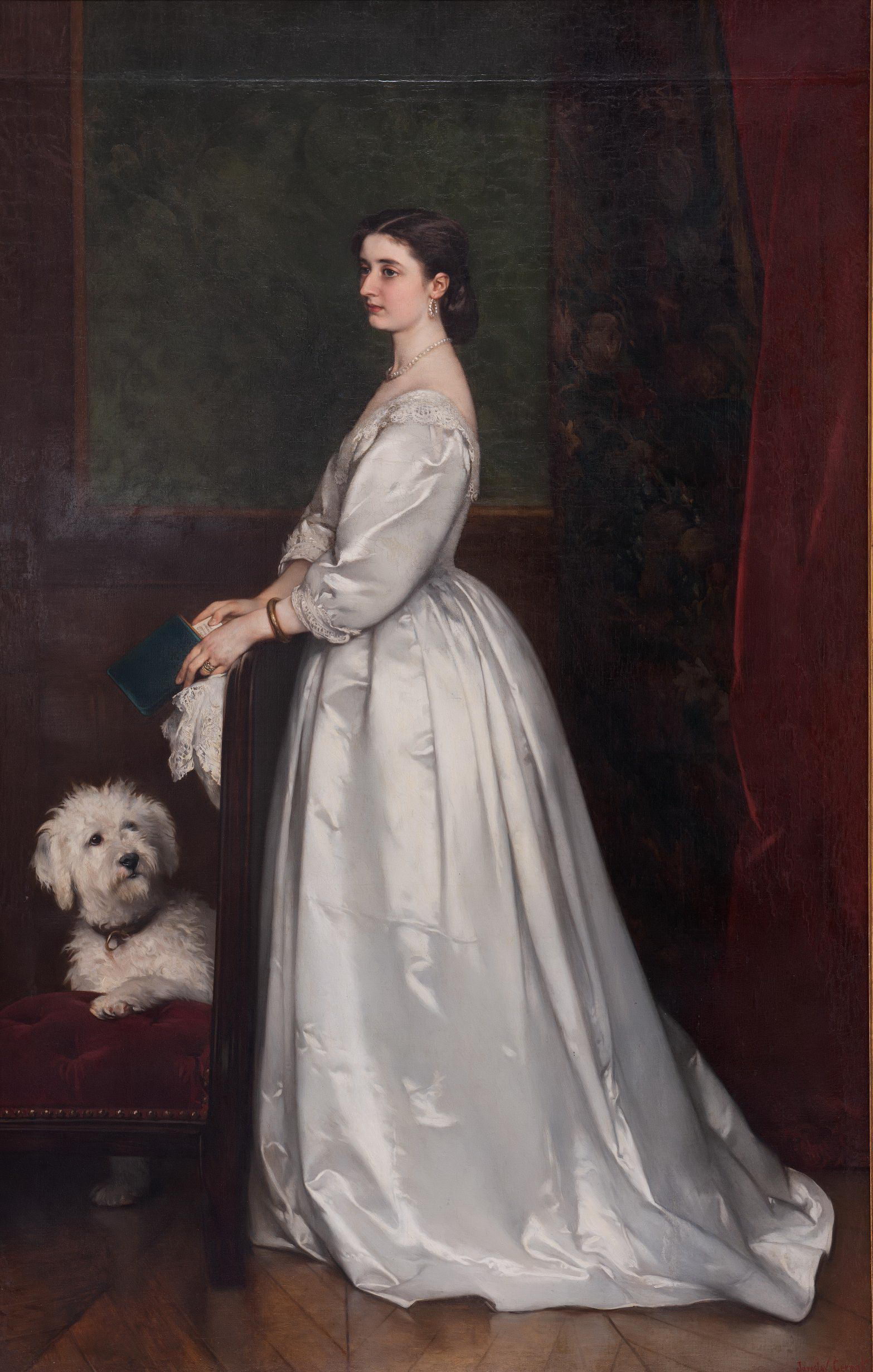
Reproductions, obituaries, retrospective exhibitions, donations to the City of Prague by Hippolyte Gallait – wife of the renowned Belgian painter Louis Gallait and the great love of Čermák’s life – as well as later literary and film adaptations gradually forged Čermák’s “second life”.
From a European professional, whose paintings were part of a rivalry between national art schools and the transformation of the exhibition scene, he became the hero of a story about loyalty to Slavic solidarity and the struggle for freedom. How did the significance of Čermák’s work change after his death, and why is it perceived differently in various European contexts today? Prague City Gallery has decided to seek an answer to this question in collaboration with the National Gallery Prague.
From 4 November 2026, the GHMP Knihovna will host the first major retrospective of Čermák’s work in almost a century. The exhibition Jaroslav Čermák: Myths of European Reality will showcase not only the extraordinary work of this Czech painter active on the international stage, but above all the life of a man who managed to forge links between Prague, Brussels, Paris and the Balkans.
A Romantic with a Paris Studio on Avenue Wagram
Jaroslav Čermák was born in 1830 in Prague into a wealthy bourgeois family. As a child, he suffered a serious hip injury, the consequences of which he bore throughout his life. After a long period spent confined to bed, he benefited from physiotherapy, followed by exercises, crutches and, later, a walking stick.
While studying at the Prague Academy in 1847, he visited Dresden; two years later, Josefa Čermáková set off with Jaroslav and her other children, travelling first to Munich, then via Berlin to Düsseldorf and finally to Antwerp. In Brussels, Čermák became a student of Louis Gallait in 1850 and was given a second studio in his house. In Gallait’s studio, he became acquainted with the milieu of Belgian historical painting, which was enjoying considerable international acclaim at the time.
It was here that he realised that a Czech painter need not be confined solely to a local audience. Brussels was, at that time, one of the centres of so-called historical painting. Not far away was Paris, where the Salon – the most prestigious exhibition of its time – took place every year. Acceptance into the Salon meant international recognition, new commissions and entry into the European artistic elite. And Čermák succeeded.
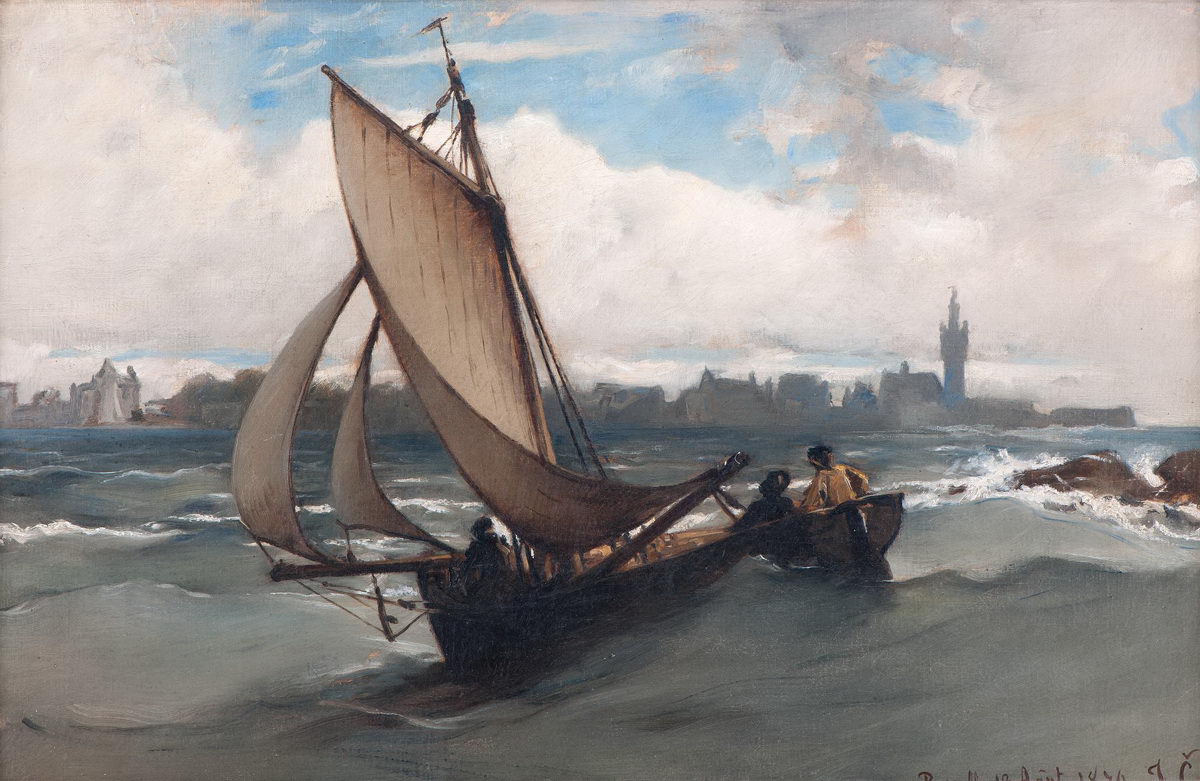
His paintings appeared repeatedly at the Paris Salons; he won awards in both France and Belgium; and his works were purchased by private collectors as well as newly established institutions. Critics praised the drama of his compositions, the psychological credibility of his figures and his ability to combine historical themes with human stories. For most artists, this would have meant a dream come true, but Čermák began to leave Paris and travel more and more frequently. In Paris, he maintained studios and later his own house; he exhibited and sold his work there, while also travelling and working seasonally in Brussels, Rome, Dalmatia and Roscoff in France, where he indulged in his beloved sea voyages.
A Painter Who Could not Bear to Remain Detached from History
In 1858, he undertook a journey through Slovakia to Dubrovnik, after which he began to travel regularly to the Balkans. He took a particular liking to Montenegro, and between 1863 and 1865 he settled in Mandaljena, Croatia. He thus visited Dalmatia at a time when the local population’s resistance against the Ottoman Empire was reaching its peak. Although, like other painters, he had come here in search of exotic scenery, he also wanted to get to know the people.
He lived among them, sketched their portraits, and recorded the landscape and everyday life of the mountain villages. He was received at the court of the Montenegrin Prince Nikola Petrović-Njegoš and painted portraits of his family. In 1862, he was staying in Cetinje, in the immediate vicinity of the Montenegrin-Ottoman conflict.
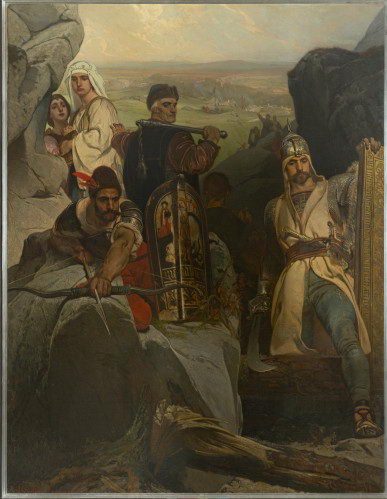
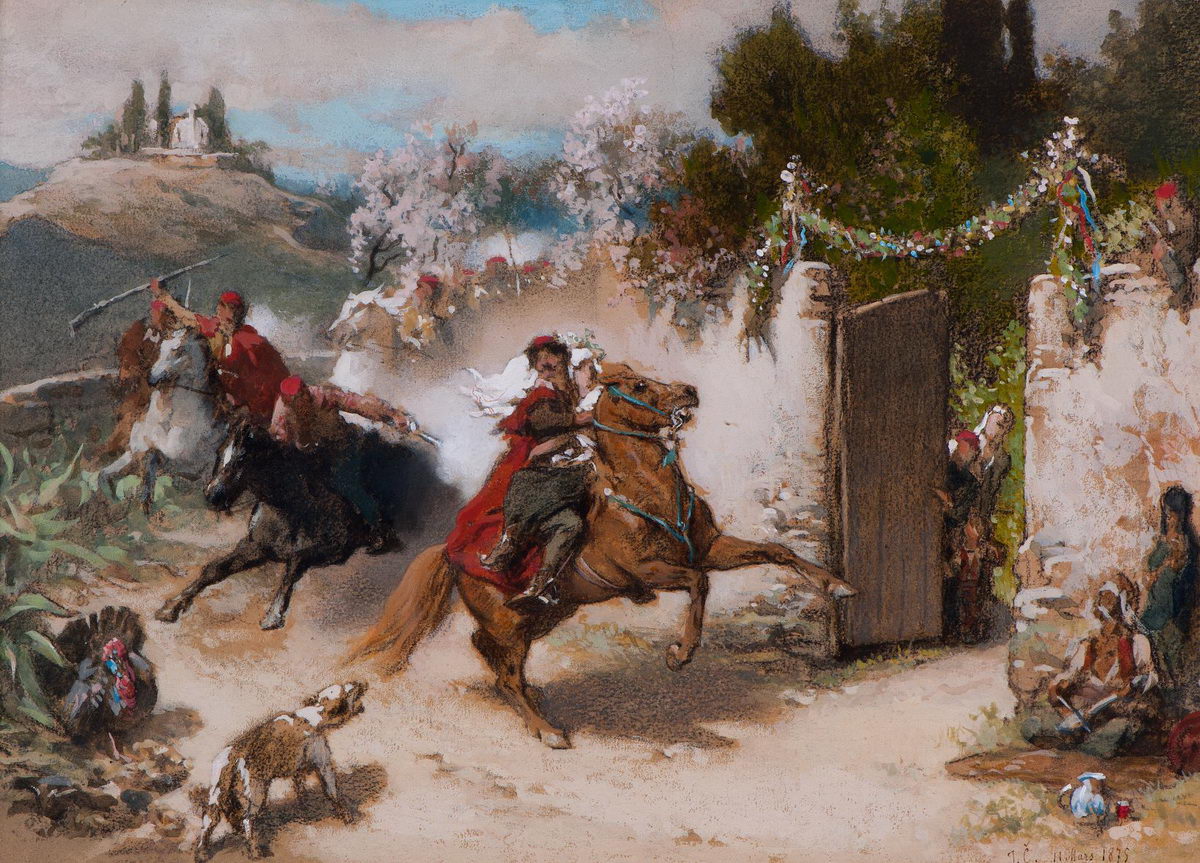
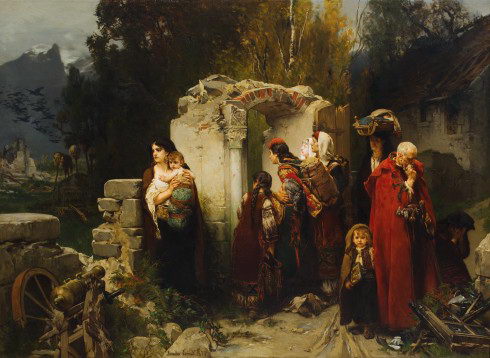
This is precisely why his paintings of the Balkan Peninsula remain so compelling to this day – whether it is Herzegovinian Women Returning to a Village Burned by Bashi-Bazouks, Study of a Slavic Rayah (Herzegovina) or Mostar. His Balkan paintings were not direct records of reality. In his studio, he combined studies from his travels with older sketches, Parisian models, props and the conventions of salon painting.
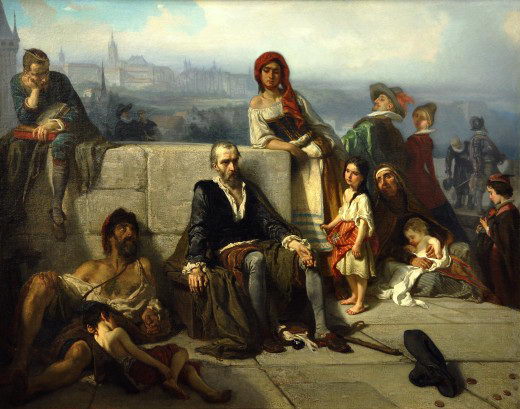
In his paintings, he depicted ordinary people caught up in the machinery of great history – mothers protecting their children, young women being led away into captivity, fighters setting off for the mountains and moments of silence between individual clashes. Nevertheless, in Čermák’s works, political empathy and the theme of national emancipation intersect with the eroticisation of the female body and a desire to captivate the public and potential collectors.
Čermák’s travels did not end with his stay in the Balkans, however. In 1859, he set off for the south of France and Spain, and subsequently travelled to Rome and Cauterets in the Pyrenees. For a time, he lived in Roscoff, France. In 1873, he was offered the post of director of the Prague Academy. However, he declined and decided to remain abroad. He died in Paris in 1878. He was 47.
The Return of an Artist Forgotten by the European Public
“Čermák’s life was just as gripping and dramatic as his paintings. To immerse oneself in them is to enter a world of heroes, the defeated, refugees and people fighting for freedom and their own identity. At a time when Europe is turning once more to nationalism and the war in Ukraine is giving these issues a painfully concrete form, Čermák’s paintings are not merely striking scenes from the 19th century. They force us to reflect on how images shape our notions of heroism, the enemy and ourselves,” says Helena Musilová, chief curator of Prague City Gallery.
Prague City Gallery collaborated with the National Gallery Prague and an international team of art historians in preparing this retrospective.
“The National Gallery Prague holds the largest collection of works by Jaroslav Čermák, which includes key pieces by the artist, and we were therefore delighted to accept Prague City Gallery’s invitation to contribute to the preparation of an exhibition and publication that will present Čermák’s work in a broader context and rediscover its artistic and historical complexity,” says Kristýna Hochmuth, curator of the Collection of Modern Art at the National Gallery Prague and co-editor of the exhibition catalogue. The NGP has loaned 53 works to the exhibition, which have undergone extensive restoration over the past twelve months, funded through the “Znovu na obdiv” programme of the Ministry of Culture of the Czech Republic “At the same time, our fellow conservators carried out extensive conservation research, which yielded interesting insights. And for young visitors, we are publishing a book entitled Jaroslav Čermák. Romantický výlet po Evropě,” adds Kristýna Hochmuth, who is also one of the exhibition’s curators.
The retrospective will not only trace Čermák’s artistic development but will also demonstrate how closely he was connected to the European cultural scene of his time. Alongside his paintings, works by his contemporaries and artists with whom he shared themes, inspiration and exhibition opportunities will be presented.
“Jaroslav Čermák is one of the key artists in our collection, and it was high time to devote special attention to him, as he had long been overlooked. His oeuvre remained a distant memory for several generations who encountered it in schools, where it was part of the compulsory décor. Today, we wish to trace his life story, as well as his artistic career and legacy, based on contemporary criteria, and to set the record straight regarding certain legends that do not entirely correspond to reality, as well as the interpretation of his work by the former regime. This exhibition will be an important milestone in our engagement with the 19th-century collection, to which we intend to devote similarly thorough attention in the future, in collaboration with a wide team of colleagues,” says Magdalena Juříková, director of GHMP.
The result is an exhibition based on new art-historical and conservation research – ranging from his early student works through his famous historical compositions to portraits, landscape paintings, drawings and sketchbooks created during his travels across Europe. The exhibition will also present an exceptional collection of loans from abroad. Works will arrive in Prague from the Musées royaux des Beaux-Arts de Belgique, the KMSKA in Antwerp, the Musée de la Vie romantique in Paris, Amsterdam Museum and other European public and private collections. Many of the paintings will be on display in the Czech Republic for the very first time.
Jaroslav Čermák – Myths of European Reality
4 November 2026 – 28 February 2027
Authors and Curators: Markéta Theinhardt, Vjera Borozan, Kristýna Hochmuth, Šárka Leubnerová, Helena Musilová, Vít Vlnas and Markéta Vondrová
Coordination: Dana Haltufová
Graphic Design: Jan Havel
Architectural Design: Tomáš Svoboda
Photo © GHMP – Galerie hlavního města Prahy